
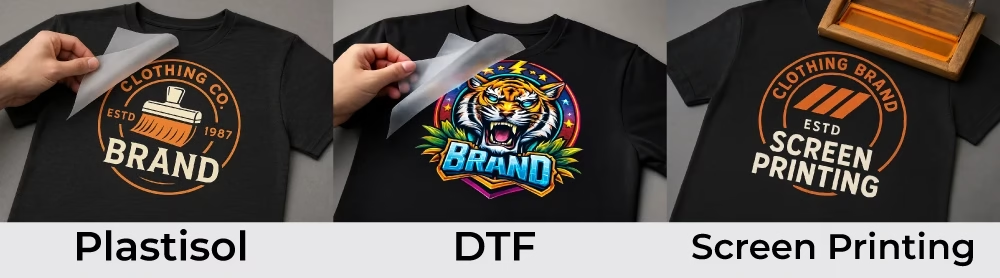
If you’re starting or growing a clothing brand, you’ve probably seen people arguing about plastisol transfers vs. DTF vs. traditional screen printing. Each method can put ink on a shirt, but they are not equal when it comes to cost, learning curve, and long-term quality.
In this post, we’ll break down how each method works, who it’s best for, and how to choose the one that fits your brand and budget.
What Are Plastisol Transfers?
Plastisol transfers are screen-printed designs printed onto special release paper instead of directly onto a shirt. You store the transfers flat, and when you get an order, you use a heat press to apply the design to the garment.
How plastisol transfers work
- Your design is separated into colors and burned onto screens.
- Ink is printed onto transfer paper instead of fabric.
- Transfers are cured and shipped to you.
- You heat press the transfer onto shirts, hoodies, or other items as needed.
Pros of plastisol transfers
- Screen print quality and feel
The ink is still plastisol screen print ink, so the look and durability are very close to traditional screen printing. - Perfect for small brands and online orders
You can press designs on demand instead of guessing sizes and sitting on boxes of pre-printed inventory. - Great for multi-color spot designs and neck labels
Ideal for logos, text, team designs, and custom neck label transfers that make your brand look more professional. - No need for a full print shop
A good heat press and some space is all you really need. No messy ink, no screens to wash out.
Cons of plastisol transfers
- Not ideal for very tiny orders if you only need one or two prints
There’s usually a minimum or a price break, so it makes more sense when you plan to press multiple shirts or restock later. - Best for spot colors instead of crazy photo-real designs
You can absolutely get great color, but for super detailed photo prints, DTF or DTG sometimes fit better.
What Is DTF (Direct-to-Film) Printing?
DTF (Direct-to-Film) uses a printer to print your design with special inks onto a film. Adhesive powder is added, then cured. You press that film onto the garment in a similar way to a transfer.
Pros of DTF
- Full-color artwork with gradients and tiny details
Great for artwork with lots of colors, photos, or shading that would be expensive or complex to do with traditional screen printing. - Short runs are easy
Because there’s no screen setup, small quantities are simple and usually affordable. - Can print on many fabric types
Works on cotton, blends, and some poly fabrics when done correctly.
Cons of DTF
- Feel of the print
Depending on the film, ink, and settings, DTF can feel thicker or more “plasticky” on the shirt compared to a soft plastisol print. - Quality varies a lot between suppliers
There are many cheap setups, and not all of them produce long-lasting prints. Poor curing or cheap powder can lead to cracking or peeling. - More technical if you try to do it yourself
Running a DTF printer at home can be high-maintenance, especially if you are not printing every day.
What Is Traditional Screen Printing?
Traditional screen printing is what most people think of when they picture printed t-shirts. Ink is pushed through a mesh screen directly onto the garment and then cured with heat.
Pros of screen printing
- Very durable and proven
Screen printing has been the standard for decades. When done right, it holds up extremely well to washing and heavy use. - Great for large bulk orders
Once the screens are set up, printing hundreds of shirts is fast and efficient, which keeps the cost per shirt low. - Soft feel when using the right ink and mesh
Especially on cotton shirts, a well-done screen print feels smooth and natural.
Cons of screen printing
- High setup cost and time
Each color needs a screen, and each screen takes time to burn, register, and clean. Small orders can get expensive. - Not beginner-friendly to run yourself
You need space, equipment, ventilation, chemicals, and practice. For many small brands, that’s too big of a jump. - Less flexible for on-demand printing
If you print 100 shirts and only sell 40 in a certain size, you’re stuck with extra inventory.
Side-by-Side Comparison
| Feature | Plastisol Transfers | DTF Printing | Traditional Screen Printing |
|---|---|---|---|
| Upfront setup cost | Low (you just order transfers) | Medium–High if you own the printer | High if you run your own shop |
| Best for order size | Small–medium, on-demand fulfillment | Small–medium, full-color designs | Medium–large bulk runs |
| Print feel | Similar to screen print, can be soft | Can feel thicker depending on setup | Can be very soft and smooth |
| Design type | Logos, text, spot color art, neck labels | Photos, gradients, high-detail illustrations | Spot color designs, some simulated process |
| Inventory management | Press as you sell, low risk of leftover stock | Press as you sell | Must pre-print and store inventory |
| Skill level to start | Beginner-friendly with a heat press | Hard if you run the printer; easy if you buy films | Hard if you run your own shop |
Which Method Is Best for Your Clothing Brand?
The “best” method depends on how you run your brand and what stage you’re in.
Choose plastisol transfers if…
- You want screen print quality without owning a full shop.
- You sell online and need to press shirts as orders come in.
- You want clean logos, bold text, and professional neck labels.
- You don’t want to babysit a printer or deal with chemicals and screens.
Choose DTF if…
- Your designs are very photo-heavy, gradient-heavy, or ultra-detailed.
- You need low quantities in many different designs and colors.
- You’re okay with a slightly different feel on the shirt in exchange for full-color flexibility.
Choose traditional screen printing if…
- You have large, predictable bulk orders for events, schools, or businesses.
- You already have a relationship with a local screen shop you trust.
- You’re printing hundreds of the same design and want the lowest cost per shirt.
Why Many Growing Brands Start With Plastisol Transfers
For most small to mid-sized clothing brands, plastisol transfers hit the sweet spot:
- You don’t need to guess sizes or sit on boxes of unsold inventory.
- You keep the classic screen print look and durability.
- You only need a reliable heat press and good transfers to get professional results.
- You can keep transfers in stock and press more shirts quickly when a design starts selling.
This lets you focus on what actually grows your brand: better designs, better marketing, and better customer relationships instead of fighting with equipment all day.
Final Thoughts
If you’ve been stuck trying to decide between plastisol transfers, DTF, and screen printing, start with this simple rule:
- Want flexibility, low risk, and screen print quality? Go with plastisol transfers.
- Need wild full-color prints in tiny runs? Look into DTF.
- Got a big event or uniform order of the same design? Traditional screen printing can still be a strong option.
If you’re ready to test plastisol transfers for your brand, check out our transfer options and start with a design you already sell. Once you see how easy it is to press your own shirts, you’ll never want to go back to guessing inventory again.